
How can underground infrastructure contribute to a more sustainable energy future?
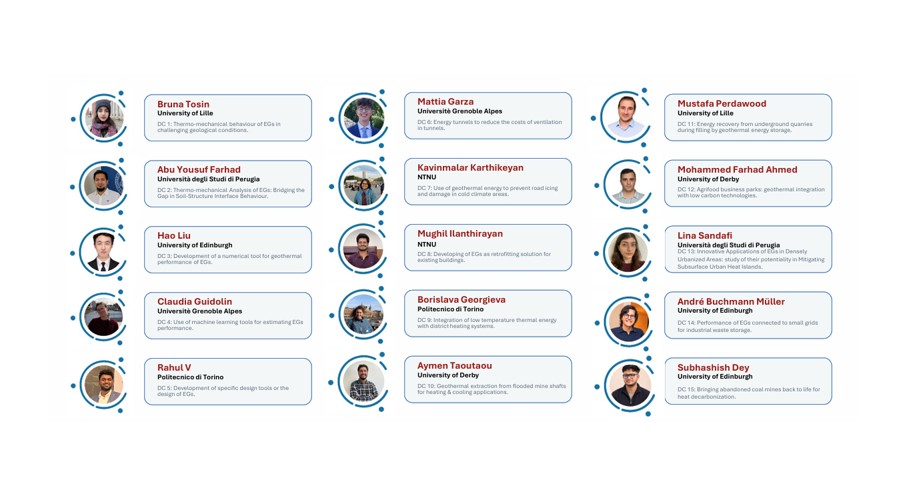
This is one of the key questions driving the GENIUS Doctoral Network (GENIUS DN), which brings together 15 Doctoral Candidates (DCs) working on interconnected research projects to advance the understanding, development and integration of energy geostructures.
Through an ambitious programme of research, training and international collaboration, GENIUS DN aims to address scientific and technical challenges associated with the use of underground infrastructure for sustainable heating, cooling and thermal energy storage.
Turning Underground Infrastructure into Energy Solutions
Energy geostructures are underground structural elements that combine their conventional engineering functions with the ability to exchange and store thermal energy. By incorporating geothermal technologies into infrastructure such as building foundations, tunnels and retaining walls, these systems offer opportunities to harness the thermal energy available beneath the ground.
As the demand for low-carbon heating and cooling solutions continues to grow, energy geostructures have the potential to contribute to more efficient and sustainable buildings and infrastructure. They can also support the integration of renewable energy technologies and underground thermal energy storage into wider energy networks.
However, several challenges remain before these technologies can be adopted more widely, including improving our understanding of their long-term behaviour, optimising their performance and developing reliable approaches for design and integration.
Addressing these challenges is central to the GENIUS DN research programme.
Exploring 15 Interconnected Research Projects
At the heart of GENIUS DN are 15 individual doctoral research projects, each investigating a different aspect of energy geostructure technology and its potential applications. Bringing together expertise in geotechnical engineering, geothermal energy, structural engineering, numerical modelling and sustainable energy systems, the projects cover a diverse range of research areas.
These include understanding the thermo-mechanical behaviour of energy geostructures and their interaction with surrounding soils, developing advanced numerical and predictive tools, and exploring opportunities to integrate geothermal technologies into transport infrastructure.
Other projects investigate the potential of abandoned mines and other underground spaces for thermal energy storage, alongside the integration of energy geostructures with district heating networks, existing buildings and industrial energy systems.
Although each Doctoral Candidate focuses on a specific research challenge, the projects are designed to complement one another, encouraging knowledge exchange and collaboration across the network.
Together, their findings aim to contribute to the scientific knowledge and technological advances needed to support the wider implementation of energy geostructures.
Connecting Research, Innovation and Industry
An important aspect of GENIUS DN is its commitment to connecting scientific research with practical engineering applications. The network brings together academic institutions and associated partners, providing opportunities for researchers to engage with expertise from different disciplines and sectors. Through this collaborative approach, GENIUS DN aims to address challenges relevant to the real-world design, construction and operation of energy geostructures.
The research programme also encourages consideration of how these technologies can be integrated into existing infrastructure and wider energy systems, helping to identify opportunities for more sustainable approaches to heating, cooling and energy storage.
Supporting the Next Generation of Researchers
Alongside advancing scientific knowledge, GENIUS DN is dedicated to developing the skills and expertise of the next generation of researchers. The 15 Doctoral Candidates benefit from an international research and training environment, combining their individual doctoral projects with network-wide training activities, workshops, secondments and opportunities for interdisciplinary collaboration.
These activities are designed to strengthen their technical expertise, develop transferable skills and encourage connections between academia and industry.
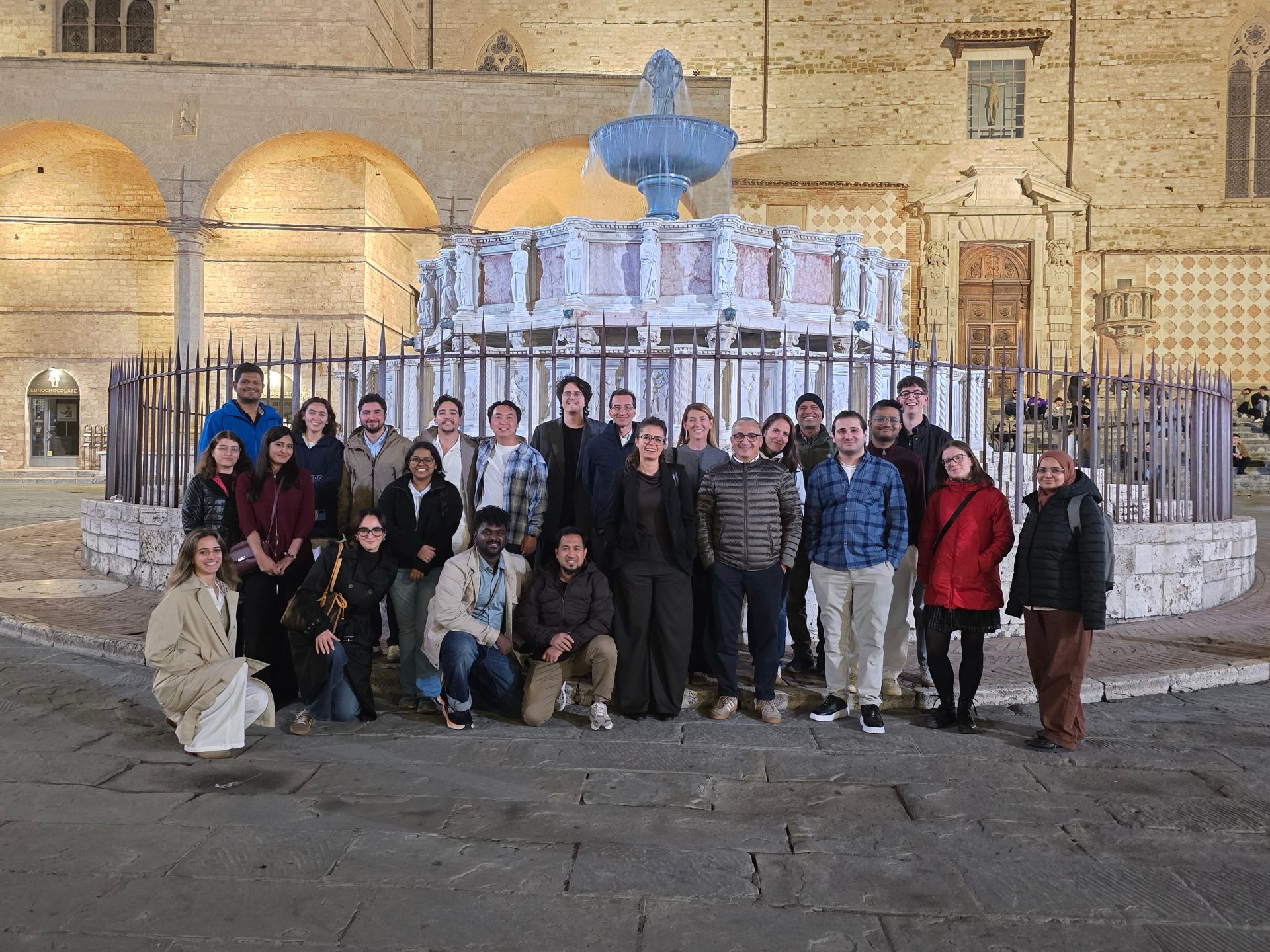
The first GENIUS DN Training School, held at the University of Perugia in October 2026, marked an important milestone in the network’s training programme, bringing Doctoral Candidates and academic partners together for scientific learning, knowledge exchange and collaboration.
Follow the GENIUS Research Journey
As the research programme progresses, we look forward to sharing more about our Doctoral Candidates, their individual projects and the developments emerging from their work.
Through future news updates and researcher spotlights, we will introduce the people behind GENIUS DN, explore the challenges they are investigating and highlight their contributions to the advancement of sustainable energy geostructures.
Discover our 15 Doctoral Candidates: People – GENIUS DN
Explore their research projects: Projects – GENIUS DN
Follow GENIUS DN on LinkedIn for the latest research news, training activities and project updates.



This project is funded by the European Union as part of the Horizon Europe programme, Marie Skłodowska-Curie Actions Doctoral Networks (MSCA-DN) 2024 and under the Agreement number 101226708